
Vendor-Agnostic AI Leadership: Why True Independence Beats the Hype
Vendor-Agnostic AI Leadership: why true independence beats the hype. Miklós Roth helps companies choose the right AI solutions based on real business needs — not vendor pressure.
ARTIFICIAL INTELLIGENCE
Video Guru
6/27/20266 min read
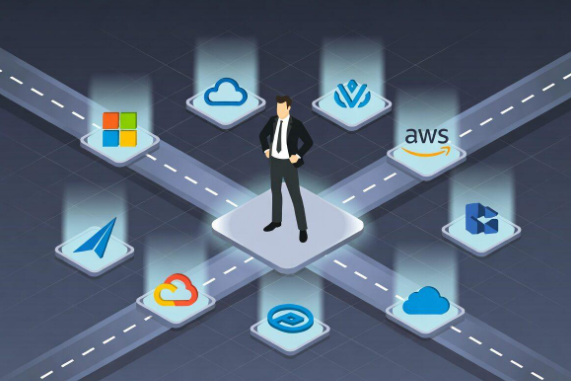
Everybody’s selling AI in 2026. Cloud giants push their stacks. Startups hype revolutionary models. Consultants bundle tools with their services. It’s easy to get swept into a single ecosystem and call it strategy. But here’s the truth I share with every CEO I advise: the real winners aren’t married to one vendor. They stay independent.
I’m Miklós Róth of Roth AI Consulting. My job is helping organizations build AI capabilities that last. Vendor-agnostic leadership isn’t about avoiding tools. It’s about staying sovereign over your own strategy, data, and future options. In a world of rapid model improvements and shifting economics, true independence has become a massive competitive edge.
I’ve seen companies locked into yesterday’s “best” platform watch competitors leapfrog them with newer, cheaper, or more capable alternatives. Independence isn’t neutrality for its own sake. It’s strategic freedom. Let’s break down why it matters more than ever, the risks of lock-in, how to evaluate objectively, and what agnostic leadership looks like in practice.
The Lock-In Trap: Expensive and Common
Vendor lock-in feels comfortable at first. One throat to choke. Pre-integrated features. Dedicated support. But it quietly erodes your leverage.
Data gravity is the biggest culprit. Once your workflows, fine-tunes, and proprietary prompts live deep in one provider’s ecosystem, switching becomes painful and costly. Costs can spike when usage scales or pricing changes. Innovation slows because you’re limited to their roadmap.
I remember a mid-sized financial services firm that bet heavily on one large language model provider. Great results initially. Then newer open-source and specialized models offered better performance at half the inference cost. Migrating proved nightmarish—retraining, revalidating compliance, updating integrations. Months of distraction and seven-figure expenses. All avoidable with more agnostic foundations.
Risks go beyond money. Over-reliance creates single points of failure. Outages, policy changes, or competitive shifts by the vendor hit you hard. Governance suffers when your team thinks in one provider’s terms instead of business problems. Talent development narrows—people become experts in Vendor X rather than versatile AI practitioners.
In 2026, the pace of change makes lock-in especially dangerous. New architectures, multimodal capabilities, and efficiency breakthroughs emerge constantly. Vendor-agnostic leaders mix and match: best-in-class for specific tasks, fallback options, and negotiation power. They avoid hype cycles and capture value faster.
Why Independence Beats the Hype
True vendor-agnostic AI leadership starts with a simple principle: technology serves the business, not the other way around. You choose tools based on merit—performance, cost, security, fit—not ecosystem momentum.
This approach delivers several strategic advantages:
Flexibility and Future-Proofing: Swap components as better options appear. Combine open-source, proprietary, and custom models optimally.
Cost Optimization: Play providers against each other. Use routing logic to send queries to the cheapest capable model.
Intellectual Property Protection: Reduce dependency on black-box systems. Maintain control over your data and customizations.
Better Decision Making: Teams evaluate tools objectively using business criteria rather than vendor marketing.
Stronger Governance: Policies focus on outcomes and risks, not “how we do it in Platform Y.”
From my S•I•C•T perspective, agnosticism strengthens all four dimensions. It supports adaptable Structure through modular architectures. Improves Information flows by avoiding proprietary silos. Enhances Cohesion as teams align around shared business goals instead of tool loyalties. And dramatically boosts Transformation capacity because the organization learns principles, not just interfaces.
How to Evaluate Tools Objectively
Independence requires discipline. Here’s the evaluation framework I use with clients:
Start with business outcomes, not features. What problem are you solving? What metrics define success? Cost per task completed? Accuracy? Speed? Compliance?
Then assess:
Performance: Test across realistic workloads, not just benchmarks. Include edge cases and long-context scenarios.
Cost Structure: Total cost of ownership—inference, fine-tuning, integration, maintenance, data transfer.
Security and Compliance: Data residency, audit logs, certifications. How does the vendor handle breaches?
Integration and Interoperability: How easily does it connect with your existing systems and other AI tools?
Vendor Health: Financial stability, roadmap transparency, support SLAs, community/ecosystem strength.
Exit Strategy: How hard would migration be? Are there open standards or export options?
Run side-by-side proofs of concept for top contenders. Involve actual users, not just technical teams. Measure real productivity impact.
I advise maintaining a “tool radar” process—quarterly reviews of emerging options against current stack. This keeps you informed without constant churn. Build abstraction layers: internal APIs or orchestration tools that let you swap backends with minimal disruption.
For generative AI specifically, many organizations now use multi-model routing. A query goes to the optimal model based on cost, capability, and sensitivity. This agnostic layer delivers better economics and resilience.
Building Vendor-Agnostic AI Leadership in Practice
It starts at the top. As CEO or AI leader, champion independence in strategy documents and communications. Reward decisions based on merit, not convenience.
Practical steps:
Create an AI Architecture Review Board: Cross-functional group that evaluates and approves major tool choices using objective criteria.
Invest in Internal Capabilities: Prompt engineering, evaluation frameworks, basic orchestration. These skills transfer across vendors.
Prioritize Open Standards and Portability: Favor solutions with strong API compatibility and export features.
Develop Multi-Vendor Playbooks: Document when and why to use different tools for different tasks.
Negotiate Flexibly: Avoid long exclusive contracts. Build in benchmarking and exit clauses.
In one manufacturing client, we helped shift from a single analytics platform to a best-of-breed approach. They combined specialized sensors with multiple AI providers for quality control. Costs dropped 35%. Insights improved. Teams gained confidence in evaluating new options independently.
Mid-market companies benefit enormously. Without massive enterprise deals, they gain agility that larger, locked-in competitors envy. Independence levels the playing field.
The Risks of False Agnosticism
Not all “independent” advice is equal. Some consultants claim neutrality but have hidden partnerships. True independence means transparent incentives and deep cross-vendor experience.
Watch for red flags: recommendations that always favor one ecosystem, lack of migration experience, or over-focus on latest hype without proven integration patterns.
Genuine agnostic leaders have battle scars from multiple environments. They know trade-offs intimately. At Roth AI Consulting, we stay independent by design—no vendor reselling, no commissions. Our focus is your long-term capability and outcomes.
The Strategic Edge in 2026 and Beyond
Vendor-agnostic AI leadership isn’t a nice-to-have. It’s becoming table stakes for sustainable advantage. The hype will continue. New winners will emerge and fade. Organizations that maintain sovereignty will adapt faster, control costs better, protect what matters most, and innovate on their own terms.
This approach requires more upfront thought and discipline. The payoff is freedom—freedom from pricing whims, freedom to choose the best tool for each job, freedom to evolve at the speed of your business rather than a vendor’s schedule.
Stop asking “Which vendor should we bet on?” Start asking “How do we build AI capabilities that serve us, regardless of who provides the underlying models?”
That shift changes everything.
If you’re ready to explore vendor-agnostic strategies tailored to your organization, visit rothaiconsulting.com. Let’s cut through the hype together and build something durable.
(Word count: ~1980)
FAQ: Vendor Agnostic AI and Independent AI Advisors
1. What does vendor-agnostic AI really mean? It means selecting and orchestrating AI tools based on merit and business fit rather than commitment to any single provider’s ecosystem, maintaining strategic flexibility and control.
2. Why is independence more important in 2026? Rapid innovation, shifting economics, and regulatory changes make lock-in riskier than ever. Agnostic leaders adapt faster and avoid costly migrations.
3. How do I evaluate AI tools without vendor bias? Use objective scorecards focused on business outcomes, total cost, security, interoperability, and exit costs. Run comparative pilots with real users.
4. What are the main risks of vendor lock-in? Higher long-term costs, reduced flexibility, data portability issues, single points of failure, and slower adoption of superior new technologies.
5. Can smaller companies afford to be vendor-agnostic? Yes—often more easily than large enterprises with legacy commitments. Start with orchestration layers and focus on portable skills and data practices.
6. How does an independent AI advisor help? They bring cross-vendor experience, unbiased evaluation frameworks, and focus on your long-term capabilities rather than selling specific products. See rothaiconsulting.com for examples.
7. Does being agnostic mean avoiding all major vendors? No. It means using them strategically when they’re the best fit, combined with alternatives and abstraction layers for flexibility.
8. How do I build internal vendor-agnostic capabilities? Invest in evaluation skills, orchestration tools, prompt and data management practices that work across platforms, and ongoing learning programs.
9. What’s the connection to broader AI strategy? Agnosticism supports better governance, innovation, and transformation by keeping focus on business problems and systemic health rather than tool-specific dependencies.
10. Where can I get practical help implementing this? Roth AI Consulting specializes in vendor-agnostic AI leadership and strategy. Visit rothaiconsulting.com to learn more about diagnostics, roadmaps, and hands-on guidance without vendor bias.