
Preparing for AI Regulation: What European Business Leaders Must Do Now
Preparing for AI Regulation: what European business leaders must do now to stay compliant, competitive, and ready for the evolving regulatory landscape in 2026 and beyond.
ARTIFICIAL INTELLIGENCE
Video Guru
6/27/20265 min read
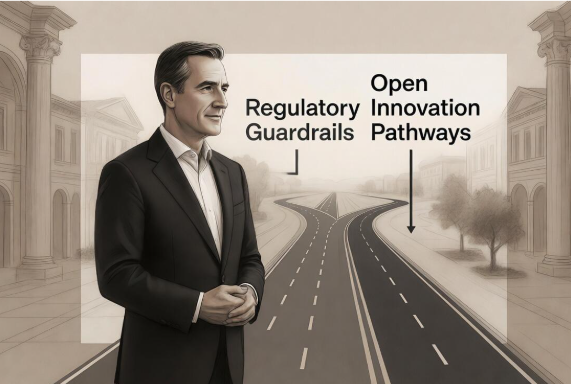
European business leaders face a new reality in 2026: AI regulation is no longer coming—it’s here. The EU AI Act and related rules are reshaping how organizations can develop, deploy, and use artificial intelligence. Many CEOs feel caught between compliance burdens and the pressure to innovate. The good news? With the right approach, regulation becomes a strategic advantage rather than a roadblock.
I’m Miklós Róth of Roth AI Consulting. Having advised companies across Europe on AI strategy and systems transformation, I see regulation as a forcing function for better governance and sustainable innovation. Panic and over-compliance waste resources. Ignoring requirements risks heavy fines and reputational damage. The smart path is proactive, proportionate, and integrated with business goals.
This article outlines the current landscape, practical preparation steps, how to build governance that protects without stifling creativity, and how to turn compliance into opportunity.
Understanding the AI Act and Emerging Rules
The EU AI Act takes a risk-based approach. It categorizes systems by potential harm: unacceptable risk (prohibited), high risk (strict obligations), limited risk (transparency requirements), and minimal risk (largely voluntary).
High-risk applications—those in employment, education, critical infrastructure, law enforcement, and certain public services—face the heaviest requirements: risk management systems, data quality standards, transparency, human oversight, accuracy, robustness, and cybersecurity.
Generative AI systems have specific transparency obligations, especially when content could be mistaken for human-generated. General-purpose AI models carry additional rules based on computational power and systemic impact.
National authorities and the new EU AI Office will enforce the rules, with fines up to €35 million or 7% of global turnover. Timelines are phased, but preparation is urgent for systems already in use or under development.
Beyond the AI Act, the GDPR, Digital Services Act, and sector-specific rules (finance, healthcare) intersect. The regulatory environment rewards organizations that treat compliance as integrated risk management rather than a checkbox exercise.
Why Many Companies Are Underprepared
Common gaps I observe: lack of AI inventory, unclear risk classification processes, insufficient documentation, weak data governance, and fragmented accountability. Technical teams handle “AI stuff” while business leaders stay distant. This creates blind spots and last-minute scrambles.
From a systems view using S•I•C•T, regulation highlights weaknesses in Structure (accountability, processes), Information (data lineage, documentation), Cohesion (cross-functional alignment), and Transformation (adaptability to new requirements).
Leaders who view regulation as purely legal risk missing the bigger picture: it pushes organizations toward higher-quality, more trustworthy AI that builds customer and stakeholder confidence.
Practical Steps for AI Act Preparation
Start now with these actionable priorities:
1. Conduct a Comprehensive AI Inventory Map all AI systems in use or development. Include purpose, data sources, decision impact, and current risk level. Involve business, legal, IT, and ethics stakeholders. This foundational step reveals hidden usage and priorities.
2. Implement Risk Classification Develop a clear methodology for categorizing applications under the AI Act. Document rationale. For borderline cases, err on the side of higher scrutiny initially.
3. Establish AI Governance Framework Create a cross-functional AI Governance Committee reporting to the board or executive level. Define policies for development, deployment, monitoring, and incident response. Assign clear roles and responsibilities.
4. Strengthen Data and Documentation Practices Ensure high-quality, traceable data with proper consent and bias mitigation. Maintain technical documentation, risk assessments, and conformity procedures required for high-risk systems.
5. Build Human Oversight and Transparency Mechanisms Design systems with meaningful human review for high-risk decisions. Implement clear labeling for AI-generated content where required.
6. Integrate Compliance into Development Lifecycles Adopt “compliance by design.” Include regulatory considerations in procurement, development, testing, and deployment processes.
7. Invest in Training and Awareness Educate employees on responsible AI use, regulatory obligations, and internal policies. Foster a culture of accountability.
8. Prepare for Conformity Assessments and Auditing For high-risk systems, plan internal or external assessments. Build audit-ready processes and records.
9. Monitor Regulatory Evolution Track updates from the AI Office, national authorities, and related legislation. Engage with industry associations.
10. Conduct Gap Analysis and Roadmap Prioritize actions based on risk and business impact. Create a phased implementation plan with clear milestones and ownership.
Many mid-sized companies benefit from external guidance for initial assessments and framework design. This accelerates progress while building internal knowledge.
Governance That Protects Without Killing Innovation
Effective governance balances control with agility. Avoid overly bureaucratic processes that slow experimentation. Instead, use tiered approaches: light touch for low-risk applications, rigorous oversight for high-risk ones.
Key principles:
Proportionality: Scale requirements to actual risk.
Integration: Embed compliance into existing risk, quality, and innovation processes.
Transparency with Flexibility: Document decisions clearly while allowing iterative development.
Continuous Monitoring: Post-deployment performance tracking and feedback loops.
Ethical Foundations: Go beyond minimum requirements to build trust.
In practice, this means sandboxes for safe experimentation, clear escalation paths, and reward structures that value responsible innovation.
Organizations that get this right often see secondary benefits: better data practices, reduced operational risks, stronger customer trust, and easier talent attraction.
Framing Regulation as Opportunity
Compliance done well creates competitive differentiation. Trustworthy AI becomes a selling point. Robust governance enables bolder innovation because risks are managed.
European companies can lead in “regulated AI excellence”—high-performance systems that meet the world’s strictest standards. This positions them strongly in global markets increasingly concerned with ethics and reliability.
Regulation also levels the playing field against less scrupulous competitors and encourages investment in sustainable AI capabilities.
Leadership Actions for CEOs
Take personal ownership. Ask S•I•C•T-informed questions in board meetings. Allocate budget and talent. Communicate the strategic importance. Champion a balanced view—compliance and innovation as mutually reinforcing.
The companies that thrive will treat regulation as a catalyst for stronger systems rather than a constraint.
Preparation now pays dividends later. Start with inventory and governance framework. Build momentum through targeted pilots. Scale what works.
The AI regulatory era rewards preparedness, clarity, and integrity. European leaders who act decisively will not only comply—they will set new standards for responsible, effective AI deployment.
For practical support on AI Act preparation, governance frameworks, and turning compliance into advantage, visit rothaiconsulting.com. Let’s build resilient, innovative AI capabilities that meet both regulatory and business needs.
(Word count: ~1990)
FAQ: AI Act Preparation and European AI Compliance 2026
1. What is the EU AI Act and when does it apply? A risk-based regulation categorizing AI systems and imposing obligations accordingly. Phased implementation is underway—preparation is critical now for high-risk uses.
2. Who needs to comply with the AI Act? Organizations deploying or using AI in the EU, as well as providers placing systems on the EU market. It has extraterritorial reach.
3. What are the biggest compliance risks? Inadequate risk assessment, poor documentation, insufficient oversight for high-risk systems, and non-transparent generative AI use. Fines can be substantial.
4. How can we comply without slowing innovation? Adopt proportionate, risk-based governance. Integrate requirements into development processes and use sandboxes for experimentation.
5. What should CEOs prioritize first? AI inventory, risk classification, governance framework establishment, and gap analysis. These create the foundation for efficient compliance.
6. Do small and mid-sized companies face the same requirements? Obligations scale with risk level. Many SMEs focus on lower-risk applications but still need basic policies and awareness.
7. How does the AI Act intersect with GDPR? Significant overlap on data protection. Coordinated compliance efforts are essential, especially around data quality and individual rights.
8. What role does governance play? Central. Strong governance ensures consistent application of requirements and supports ethical, trustworthy AI.
9. Can regulation become a competitive advantage? Yes. Companies that build robust, transparent systems can differentiate on trust and quality in European and global markets.
10. Where can European leaders get practical help? Roth AI Consulting offers tailored AI Act readiness assessments, governance frameworks, and implementation support. Visit rothaiconsulting.com for insights designed for business leaders balancing compliance and innovation.